RBNZ COVID Monetary Policy Review: 5 Key Lessons
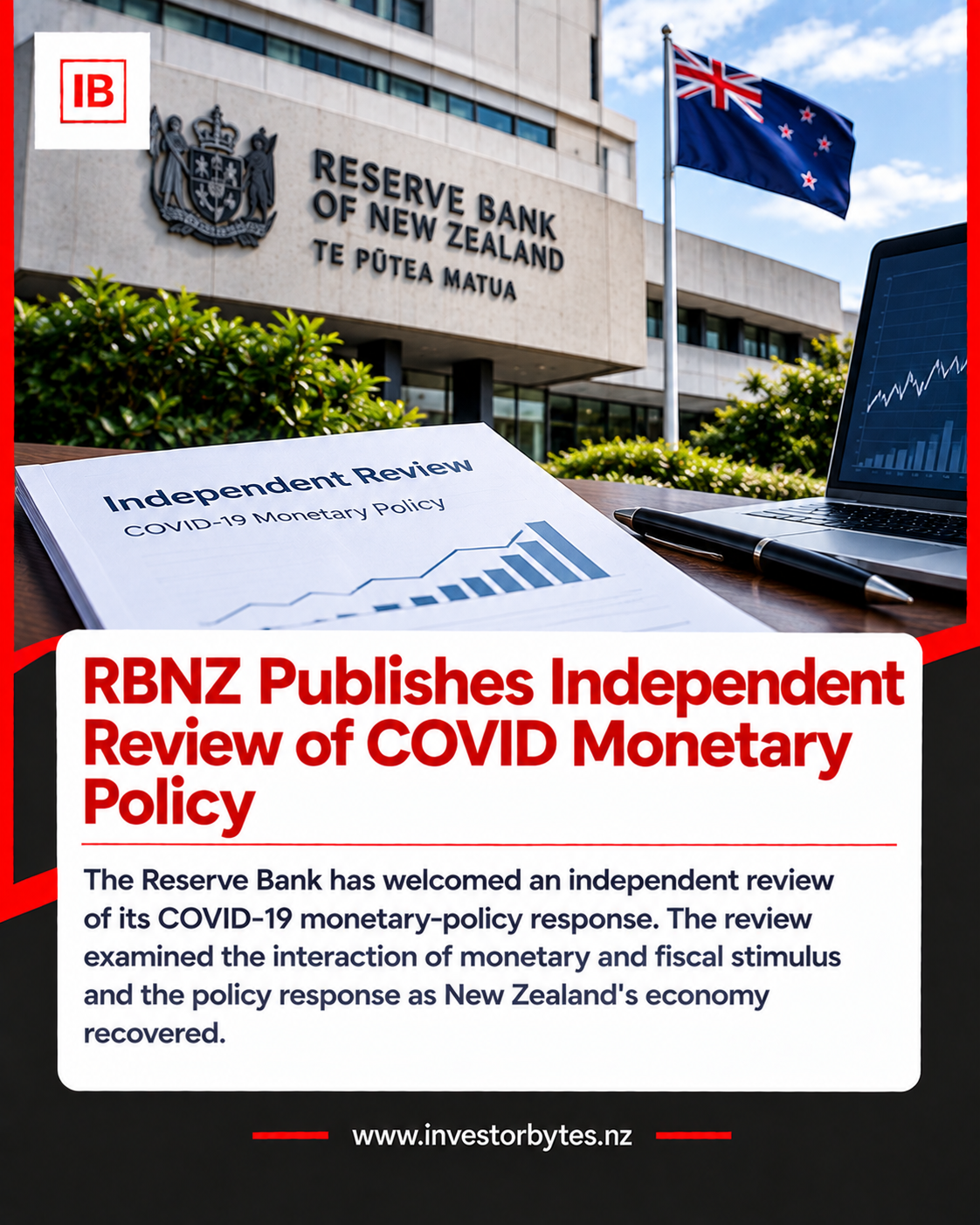
The RBNZ COVID monetary policy review has brought renewed attention to the Reserve Bank of New Zealand’s response to the extraordinary economic conditions created by the pandemic. The independent review examines monetary policy decisions made between 1 January 2020 and 31 December 2022 and is intended to provide lessons that can inform future responses to major economic disruptions.
The review is important because monetary policy during the COVID-19 period involved unusually large interventions. Central banks around the world reduced interest rates, provided liquidity and introduced additional measures to support financial markets and economic activity. New Zealand was also affected by the global economic shock, supply disruptions and changes in household and business behaviour.
What the RBNZ COVID Monetary Policy Review Examined
The RBNZ COVID monetary policy review focuses on decisions made during the three-year period from 2020 through 2022. According to the Reserve Bank, the review considers how monetary policy decisions were made, the analysis supporting those decisions and the way policy was communicated.
The review also provides an opportunity to examine the use of additional monetary policy tools during the pandemic. These included measures beyond the standard Official Cash Rate.
The New Zealand Government announced the independent review in February 2026. The stated purpose was to identify lessons that could improve the monetary policy response during future major events. The review was conducted by monetary policy experts Athanasios Orphanides and David Archer.
Why COVID-19 Created a Difficult Policy Environment
The pandemic created an unusual economic environment for policymakers. Economic activity fell sharply in many countries, businesses faced uncertainty and international trade was disrupted.
New Zealand’s monetary policy response included a reduction in the Official Cash Rate to 0.25 percent and the use of additional tools, including the Large Scale Asset Purchase programme. The Government’s original announcement said these measures were intended to support employment and businesses during the economic shock.
However, the economic environment changed significantly as economies reopened. Global demand recovered, supply constraints became more pronounced and inflation increased across many economies.
This created a difficult transition for central banks. Policies designed for an emergency environment eventually had to be adjusted as economic conditions changed.
Lessons for Future Monetary Policy
One of the most important functions of an independent review is to examine the decision-making process rather than simply looking at outcomes.
The Reserve Bank says the findings will be carefully considered by officials and that the review could contribute to improvements across the institution. These areas include modelling infrastructure and work related to future advice on the Monetary Policy Committee’s remit.
The review therefore has relevance beyond the historical COVID period. Future economic shocks could involve pandemics, financial disruptions, geopolitical events, energy-price shocks or other unexpected developments.
What the Review Means for New Zealand Markets
For investors and businesses, monetary policy remains an important influence on borrowing costs, asset prices, currency movements and economic expectations.
The lessons from the COVID period may also influence how policymakers approach future periods of unusually high uncertainty.
The review does not change today’s Official Cash Rate by itself. Current monetary policy decisions are based on the economic outlook, inflation and other relevant indicators.
The Reserve Bank increased the OCR to 2.75 percent in September 2026 after inflation reached 4.1 percent in the June quarter. The Bank has indicated that future decisions will depend on incoming economic information and the balance of inflation and growth risks.
Key Takeaway for Investors
The RBNZ COVID monetary policy review provides an opportunity to understand how New Zealand’s monetary policy framework operated during an exceptional economic period.
For markets, the longer-term importance is the possibility that lessons from the review could influence future decision-making, communication and policy preparation.
Investors should therefore view the review as part of the broader development of New Zealand’s monetary policy framework rather than as a direct forecast of future interest rates.
Source: Reserve Bank of New Zealand – Independent COVID-19 Monetary Policy Review