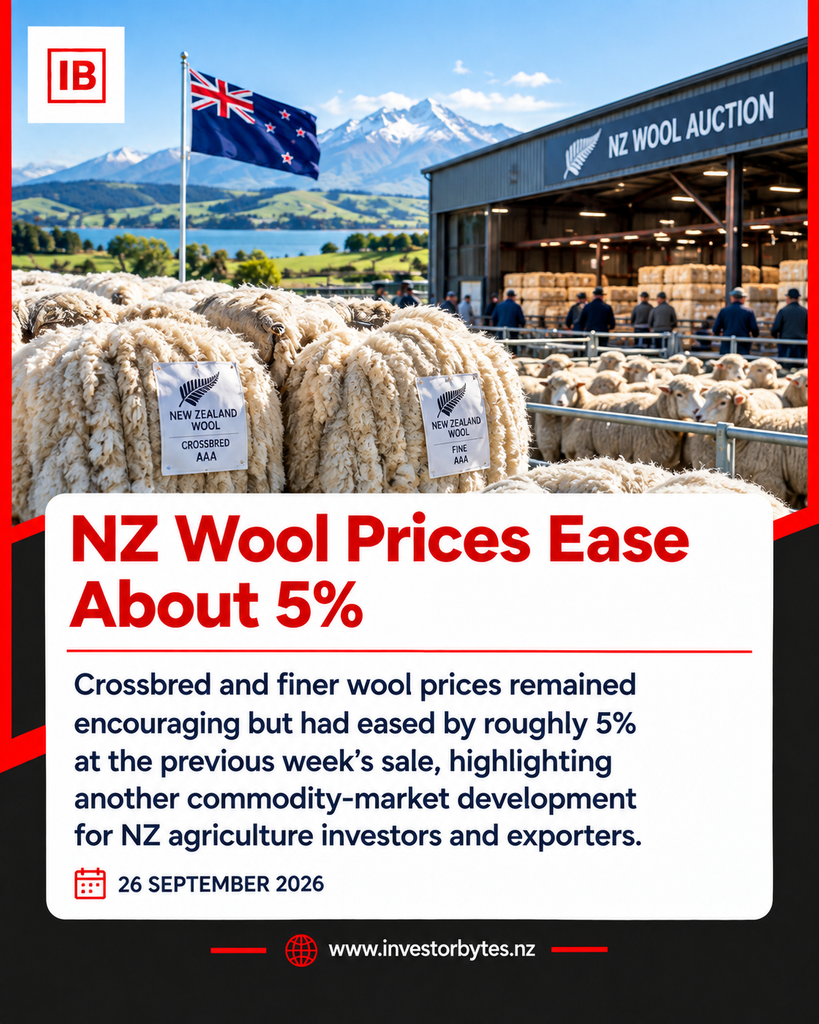
NZ Wool Prices eased about 5% at the previous sale, with crossbred and finer wool markets remaining important for NZ farmers and exporters.
Table of Contents
- NZ Wool Prices Ease
- Crossbred Wool Market
- Fine Wool Market
- Why Wool Prices Matter
- Impact on Farmers
- Export Market
- Commodity Investors
- Market Outlook
- FAQs
- Conclusion
NZ Wool Prices Ease
NZ Wool Prices eased by approximately 5% at the previous week’s sale, according to the 26 September Agsafe Weekly Rural Report.
The report said both crossbred and finer wool prices remained encouraging but had eased by around 5%.
The movement provides another development for New Zealand’s agricultural commodity markets.
Crossbred Wool Market
Crossbred wool is an important part of New Zealand’s wool industry.
It is commonly used for carpets, home textiles and other products.
The performance of NZ Wool Prices can therefore reflect international demand for wool products as well as available supply.
Fine Wool Market
Fine wool serves different market segments and can attract premium pricing depending on quality and demand.
The latest report grouped both crossbred and finer wool markets as encouraging despite the recent decline.
Why Wool Prices Matter
Wool remains an important agricultural export product.
For farmers, wool sales can contribute to overall farm income.
For exporters and processors, global demand influences purchasing decisions and margins.
The movement in NZ Wool Prices therefore deserves attention from businesses operating throughout the wool supply chain.
Impact on Farmers
A 5% change in wool prices can affect farm revenue, although the financial impact differs between farms.
Wool income is influenced by flock size, wool type, quality, production costs and sale timing.
The NZ Wool Prices trend is therefore only one part of the farm financial equation.
Export Market
New Zealand wool is sold into international markets.
Global textile demand, consumer spending and manufacturing activity can influence prices.
Exchange rates also matter because exporters receive foreign-currency revenue but report financial results in New Zealand dollars.
Commodity Investors
Commodity investors can monitor wool prices alongside other agricultural markets.
Wool is different from dairy or meat because its demand profile is closely linked to textile manufacturing and consumer preferences.
Changes in global economic conditions can therefore influence the sector.
Market Outlook
The latest report described the market as encouraging despite the 5% decline.
Future movements in NZ Wool Prices will depend on supply, international demand, currency movements and auction conditions.
FAQs
How much did NZ Wool Prices fall?
The report said prices had eased by approximately 5% at the previous week’s sale.
Which wool types were mentioned?
Both crossbred and finer wool were highlighted.
Why are wool prices important?
They influence farm income, exporters and agricultural commodity markets.
Conclusion
NZ Wool Prices remain an important indicator for New Zealand’s rural economy. The latest 5% easing shows that commodity prices can move even when underlying market conditions remain relatively encouraging.
Source: Agsafe Weekly Rural Report
https://nz.investorbytes.com/wp-admin/post.php?post=26108&action=edit