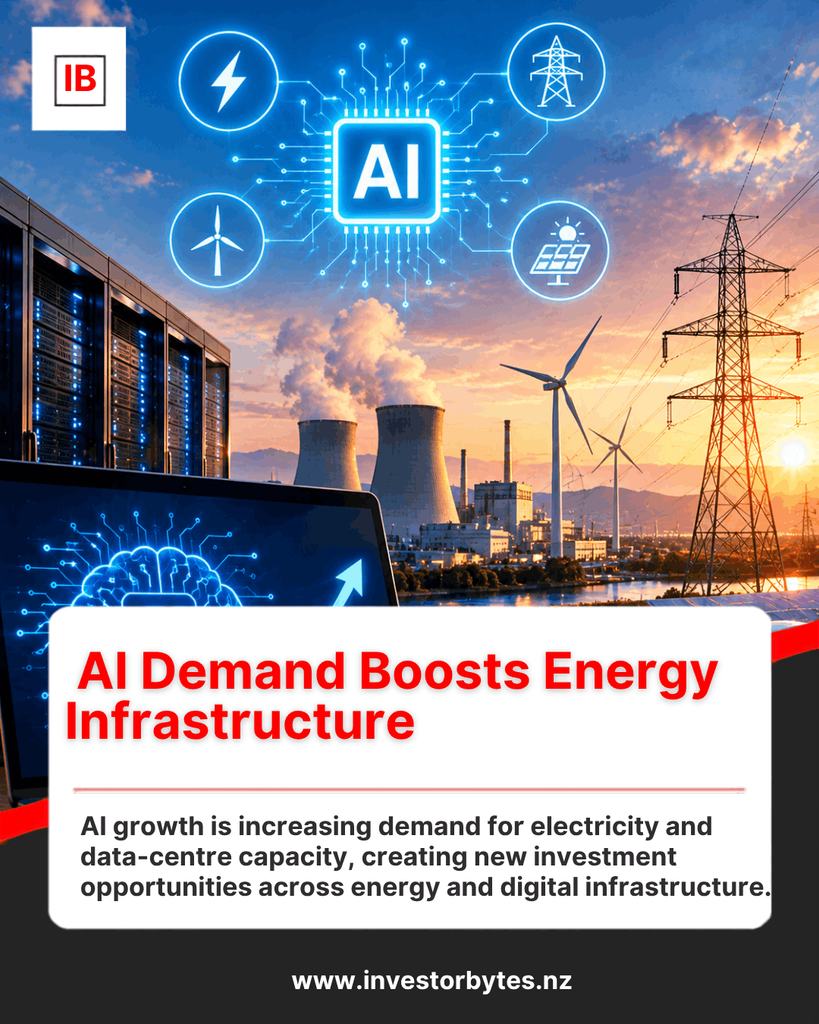
AI Energy Infrastructure is gaining momentum as rising data-centre demand increases electricity needs and creates new opportunities for renewable energy investors.
AI Energy Infrastructure Demand Is Rising
The rapid expansion of artificial intelligence is creating demand far beyond software and computing hardware. Data centres require large amounts of reliable electricity, creating new opportunities for energy producers, renewable-energy developers and digital infrastructure companies.
New Zealand infrastructure investor Infratil is one example of this trend. The company said its US renewable-energy platform, Longroad Energy, is benefiting from increasing electricity demand linked to AI and data-centre development. Infratil has also identified opportunities to combine its energy and data-centre expertise.
1. AI Is Increasing Electricity Demand
AI workloads require substantial computing capacity, and large-scale data centres consume significant amounts of electricity.
Infratil’s annual report noted that US electricity demand is expected to increase substantially through 2040, with data-centre development identified as an increasingly important source of additional electricity demand.
This creates a direct connection between AI expansion and the energy infrastructure required to support it.
2. Longroad Energy Benefits From AI Demand
Infratil’s US renewable-energy business, Longroad Energy, develops and operates utility-scale solar, battery-storage and wind projects.
The company said Longroad is benefiting from record underlying demand for new electricity supply, driven by several factors including electrification, data-centre development, manufacturing and decarbonisation. Its operating capacity reached 3.5GW at the end of FY2026, with another 2GW under construction.
Longroad’s earnings also increased significantly, with FY2026 EBITDAF reaching US$121 million, compared with US$45 million a year earlier.
3. Renewable Energy Is Becoming More Important
The growing power requirements of data centres are increasing attention on renewable electricity generation and energy storage.
Infratil said Longroad has a project designed to supply a Meta data centre and is developing further opportunities connected to data-centre electricity demand.
Renewable generation combined with battery storage can provide additional electricity capacity as data-centre operators seek reliable power supplies.
4. Data Centres and Energy Are Converging
The development of AI infrastructure is increasingly connecting two traditionally separate investment areas: digital infrastructure and energy.
Infratil said it is exploring opportunities to bring its data-centre and power expertise together. Longroad has established a dedicated data-centre team and is progressing options for more than 4GW of grid-connected data centres that could potentially be located alongside solar and battery-storage projects.
This model could allow infrastructure companies to develop power and computing capacity in a more integrated way.
5. Investment Opportunities Are Expanding
The growth of AI Energy Infrastructure is creating opportunities across multiple parts of the infrastructure market.
Demand is increasing for electricity generation, battery storage, transmission connections, data centres and other supporting infrastructure. Infratil’s latest update said its global portfolio provides multiple pathways across the AI infrastructure value chain.
The company has also committed additional capital to Longroad to support its expansion as US electricity demand increases.
Key Takeaways
- AI Energy Infrastructure is becoming an important global investment theme.
- Data centres are creating additional demand for electricity.
- Infratil’s Longroad Energy platform has 3.5GW of operating capacity.
- Another 2GW was under construction at FY2026 year-end.
- Longroad is exploring opportunities involving more than 4GW of potential data-centre capacity.
- Renewable energy and battery storage are increasingly connected to AI infrastructure growth.
What AI Energy Infrastructure Means for Investors
The expansion of AI Energy Infrastructure demonstrates how artificial intelligence is affecting traditional infrastructure markets.
As data centres expand, demand for reliable electricity increases. This can create opportunities for renewable-energy developers, battery-storage operators, transmission providers and companies involved in digital infrastructure.
However, developing this infrastructure requires significant capital, grid connections, construction capacity and long-term customer commitments. The pace of growth will therefore depend on how quickly new electricity generation and data-centre capacity can be developed.
Conclusion
AI Energy Infrastructure is emerging as a major link between the technology and energy sectors. Increasing AI computing demand is supporting the expansion of data centres while simultaneously increasing the need for new electricity generation and supporting infrastructure.
Infratil’s Longroad Energy business demonstrates this connection, with the US platform expanding renewable-energy capacity while pursuing opportunities associated with data-centre electricity demand.
As AI adoption continues to expand, energy availability and digital infrastructure are likely to remain closely connected investment themes.
External Links:
Infratil Longroad Energy Information