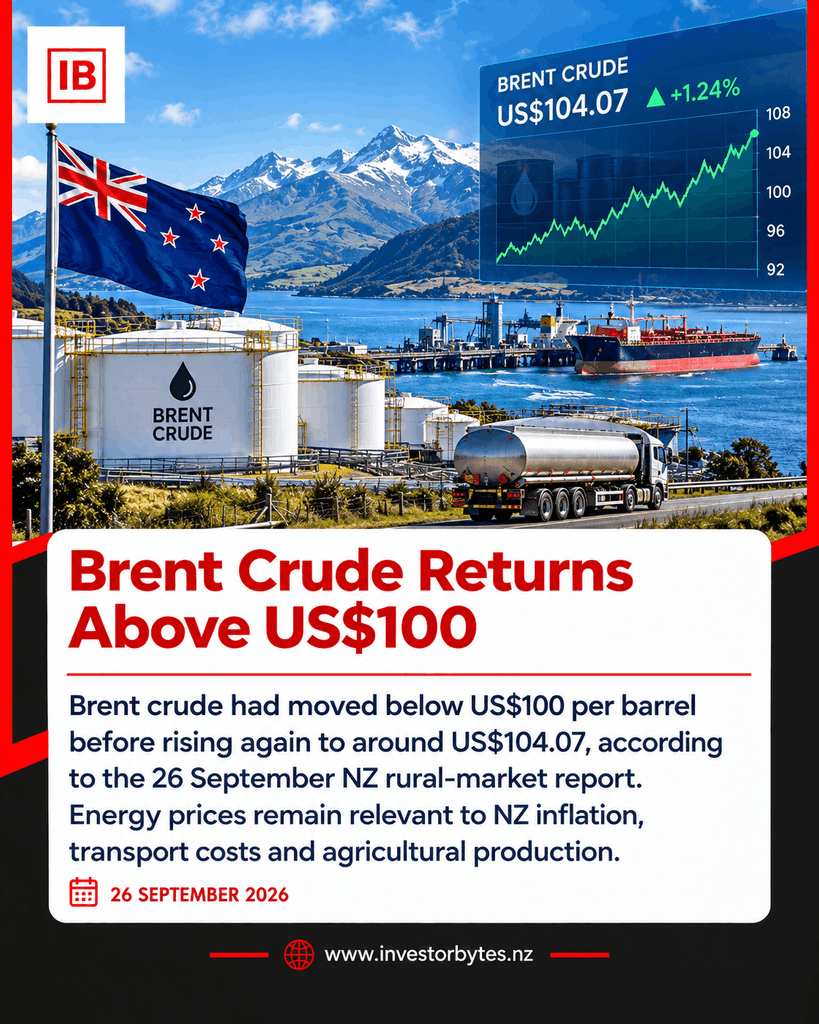
Brent Crude Returns Above US$100 as prices reach around US$104.07, keeping energy costs and inflation risks in focus for New Zealand.
Table of Contents
- Brent Crude Returns Above US$100
- Latest Brent Price
- Why Oil Matters to New Zealand
- Transport Costs
- Agricultural Costs
- Inflation Implications
- Impact on Businesses
- Investor Considerations
- FAQs
- Conclusion
Brent Crude Returns Above US$100
Brent Crude Returns Above US$100 was another important commodity-market development highlighted in the 26 September New Zealand rural-market report.
The report said Brent crude had moved below US$100 per barrel during the week before rising again to approximately US$104.07.
Interest.co.nz’s separate weekend briefing also reported international Brent around US$104.50 at the time of its market update.
Latest Brent Price
The difference between the two reported prices reflects the fact that oil prices move continuously.
For this article, the Brent Crude Returns Above US$100 figure refers to the approximately US$104.07 level reported in the 26 September Agsafe rural-market report.
Oil markets are highly sensitive to geopolitical developments, supply disruptions, demand expectations and inventories.
Why Oil Matters to New Zealand
New Zealand imports most of the petroleum products used domestically.
That means international oil prices can have a direct influence on fuel costs.
The Brent Crude Returns Above US$100 development therefore has implications for households, transport companies, farmers and businesses.
Transport Costs
Fuel is a major operating cost for transport businesses.
Higher fuel prices can increase costs for road freight, shipping, aviation and other transport services.
Those costs can eventually influence prices across the economy.
Agricultural Costs
Agriculture is also exposed to fuel prices.
Farm machinery, tractors and transport require fuel.
Higher energy costs can therefore increase production and logistics expenses for farmers.
For export-oriented agricultural businesses, the final impact depends on both commodity prices and exchange rates.
Inflation Implications
Energy prices are an important component of inflation.
If higher oil prices persist, they can put upward pressure on fuel and transport prices.
The Brent Crude Returns Above US$100 development will therefore be relevant to economists and financial markets monitoring inflation.
Impact on Businesses
Businesses with significant fuel consumption may face higher operating costs.
Airlines, logistics companies, agriculture, construction and some manufacturing businesses can be particularly sensitive to energy prices.
Companies may attempt to absorb higher costs or pass them through to customers.
Investor Considerations
Investors can monitor oil prices alongside inflation expectations, interest rates and currency markets.
The relationship is not always straightforward because a weaker NZ dollar can amplify the local-currency cost of imported oil.
FAQs
What is Brent crude?
Brent is a major international benchmark for crude oil prices.
Why is US$100 important?
The US$100 level is a widely watched psychological threshold in oil markets.
What was the reported price on 26 September?
The Agsafe report cited approximately US$104.07 per barrel.
Conclusion
Brent Crude Returns Above US$100 is significant for New Zealand because energy prices affect transport, agriculture, inflation and business costs.
Source: Agsafe Weekly Rural Report
https://nz.investorbytes.com/wp-admin/post.php?post=26084&action=edit