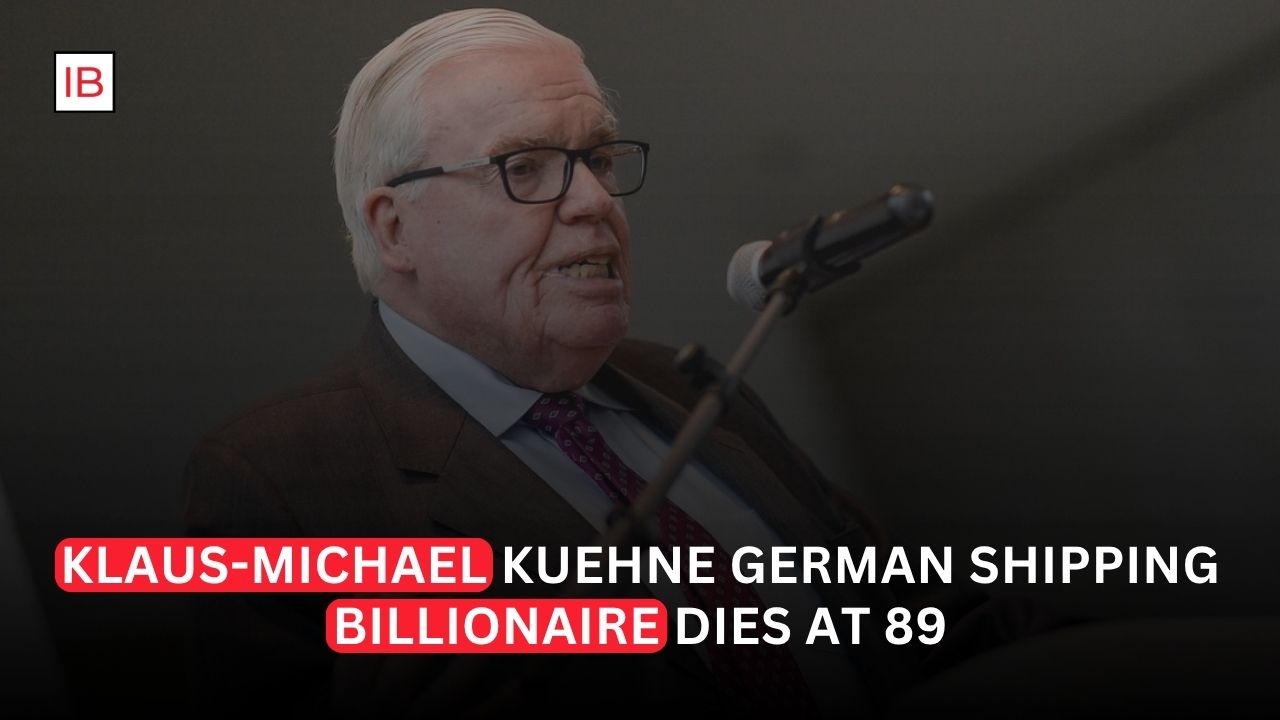
Klaus-Michael Kühne, one of Germany’s most influential business figures and a dominant shareholder in global logistics, has died at the age of 89. German media including Manager Magazin and Handelsblatt reported that Kühne died during the night of Aug. 23-24, 2026. At the time of the reports, his holding company had not yet issued an official statement.
His death marks the end of an era for Germany’s logistics industry and for a business empire built around shipping, freight forwarding, airlines and other strategic investments.
Kühne was best known for his controlling stake in Kuehne+Nagel International AG, the global logistics company founded by his grandfather. He also held major positions in shipping company Hapag-Lloyd and Lufthansa, making him one of the most influential individual investors in European transportation.
From Family Business to Global Logistics Empire
Kühne joined the family business in 1958 and became its chief executive in 1966, at only 29 years old. He eventually transformed the family company from a traditional freight-forwarding business into a global logistics powerhouse.
Kuehne+Nagel operates across sea freight, air logistics, road transportation and contract logistics. The company has grown into one of the world’s major logistics groups, connecting manufacturers, retailers and other businesses with global supply chains.
Kühne later became honorary chairman of the company. Kuehne+Nagel’s official corporate history lists him as CEO from 1966 to 1975, executive chairman from 1992 to 2009 and chairman of the board from 2009 to 2011. He remained honorary chairman afterward.
The company’s recent performance shows the scale of the business he helped build. Kuehne+Nagel reported second-quarter 2026 net turnover of CHF 6.6 billion, up 8% from a year earlier, while EBIT increased 11% to CHF 381 million.
A Billionaire With Stakes Across Transportation
Kühne’s influence extended well beyond Kuehne+Nagel.
His holding company owned roughly 30% of Hapag-Lloyd, one of the world’s major container shipping companies. He was also the largest individual shareholder in Lufthansa, with a stake of more than 20%.
Those investments gave Kühne exposure to several parts of the global transportation system.
Shipping moves the world’s goods.
Airlines move passengers and high-value cargo.
Logistics companies connect those systems.
That combination made Kühne unusually influential in an industry increasingly shaped by geopolitical tensions, supply-chain disruptions and changes in global trade.
His Wealth Made Him Germany’s Most Powerful Investors
Kühne’s business success turned him into one of Europe’s wealthiest individuals.
His fortune was estimated at around €36 billion, according to German reports, making him one of Germany’s richest people. Forbes estimated his net worth at approximately $43.2 billion as of Aug. 19, 2026.
But his importance was not simply measured by wealth.
Through his investment holdings, Kühne had substantial exposure to companies that are strategically important to Germany and Europe.
His decisions could affect corporate governance, investment strategies and ownership structures in major transportation businesses.
Hapag-Lloyd Was a Key Part of His Empire
Kühne’s position in Hapag-Lloyd was particularly significant.
The company is one of the world’s largest container shipping lines, making it strategically important to global trade.
Kühne’s roughly 30% holding gave him a major influence over the company’s ownership structure.
The investment also tied his fortune directly to the health of international trade.
Container shipping has faced enormous changes in recent years, from pandemic-era supply-chain disruptions to Red Sea attacks and geopolitical tensions affecting major shipping routes.
For an investor like Kühne, those developments were not simply market events. They directly affected the value of his assets.
Lufthansa Became Another Major Investment
Kühne also became an increasingly important shareholder in Lufthansa.
He built his position over several years and became the airline’s largest individual investor.
His investment reflected a broader strategy of concentrating on transportation businesses rather than spreading his wealth across unrelated industries.
Shipping, airlines and logistics all depend on global movement of goods and people.
That gave Kühne a distinctive investment philosophy: own companies positioned at critical points in global trade.
The Succession Question Is Now Important
Kühne’s death inevitably raises questions about the future control of his enormous holdings.
He and his wife Christine did not have children, according to reports. Much of his wealth had already been structured through the Kühne Foundation, which is expected to play an important role following his death.
That means the immediate issue may not be a traditional family succession battle.
Instead, attention will focus on how the foundation and his holding structures manage the assets.
This could be particularly important for companies such as Kuehne+Nagel and Hapag-Lloyd, where Kühne’s ownership has been strategically significant.
Kuehne+Nagel Is Already Institutionalized
There is an important distinction between Kühne personally and the company he helped build.
Kuehne+Nagel is now a major global corporation with professional management and an established corporate-governance structure.
Kühne was honorary chairman rather than the company’s day-to-day chief executive.
That reduces the likelihood of an immediate operational disruption.
However, his ownership position remains important.
The company was deeply connected to Kühne’s identity as a businessman, investor and family successor.
His passing therefore represents a major change in the company’s ownership history even if daily operations continue normally.
Hamburg Was Central to His Identity
Although Kühne spent much of his later life in Switzerland, Hamburg remained central to his identity.
He was born in Hamburg in 1937 and maintained close connections with the city.
His relationship with Hamburg extended beyond business.
He became a major supporter of the city’s cultural, medical and scientific projects and was also a prominent financial supporter of football club Hamburger SV.
His philanthropic activities therefore gave him a significant presence in German public life.
A Major Supporter of Hamburger SV
Kühne became particularly well known among football fans because of his long relationship with Hamburger SV.
He provided substantial financial support to the club over many years and was involved in efforts to strengthen its finances and sporting operations.
His relationship with HSV was sometimes controversial because of disagreements over how the club should be managed.
Nevertheless, his financial support made him one of the most important private backers in the club’s recent history.
Philanthropy Was Another Part of His Legacy
Kühne also used his wealth to support education, science, medicine and culture.
His foundation has become an important vehicle for those activities.
Among his projects were investments in medical research and logistics education.
He also supported cultural initiatives in Hamburg, including plans surrounding a new opera house.
That means his legacy will extend beyond publicly traded companies and investment holdings.
The Logistics Industry Has Changed Dramatically
Kühne’s career coincided with a massive transformation in global trade.
When he entered the family business in the 1950s, international logistics was far less integrated than it is today.
Containerization, digital tracking, global supply chains and multinational manufacturing transformed freight forwarding.
Kuehne+Nagel expanded alongside those changes.
Kühne’s achievement was recognizing that logistics could become a strategic industry rather than simply a traditional transportation service.
Today, companies rely on logistics providers to manage complex networks stretching across continents.
His Investment Strategy Reflected That View
Kühne consistently invested in transportation infrastructure.
Rather than focusing primarily on consumer brands or technology companies, he concentrated on the physical systems that allow the global economy to function.
That included ships, ports, freight forwarding and aviation.
The strategy benefited from the long-term expansion of global trade.
But it also exposed his portfolio to major risks.
Trade wars, recessions, fuel prices and geopolitical conflicts can all affect transportation companies.
His Death Comes During a Difficult Period for Global Trade
The timing is significant.
Global shipping is dealing with geopolitical disruptions, changing trade patterns and rising uncertainty over international commerce.
Container shipping companies have had to adjust to rerouted vessels, changing freight rates and shifting supply chains.
Airlines face their own challenges from fuel costs, economic conditions and changing passenger demand.
Kuehne+Nagel, meanwhile, operates at the intersection of all these trends.
The companies Kühne owned therefore remain exposed to many of the same forces that shaped his career.
What Happens to His Shares?
The future of Kühne’s holdings will be closely watched.
The key question is whether the foundation and holding structures maintain their existing stakes or eventually alter them.
Any major changes could affect ownership dynamics at Kuehne+Nagel, Hapag-Lloyd or Lufthansa.
However, there is no indication that the companies face an immediate management crisis.
The more important issue is long-term ownership.
Kühne’s investments were built over decades, and replacing his personal role with institutional structures could gradually change how those assets are managed.
A Legacy Built on Long-Term Ownership
Kühne’s career was unusual in an era when many wealthy investors regularly buy and sell assets.
He often took long-term positions.
His holdings in logistics, shipping and aviation reflected a willingness to remain invested through multiple economic cycles.
That approach helped him build an enormous fortune.
It also gave him influence that extended far beyond what a short-term financial investor might achieve.
Conclusion
Klaus-Michael Kühne’s death at 89 closes one of the most remarkable chapters in modern German business history.
He transformed a family logistics company into a global industry leader and built a personal investment empire spanning shipping, logistics and aviation.
His approximately 53% ownership of Kuehne+Nagel, major stake in Hapag-Lloyd and large position in Lufthansa made him an unusually powerful figure in European transportation.
But his legacy is not limited to his wealth.
He demonstrated how long-term ownership of critical infrastructure businesses can create enormous economic influence. He also left a significant philanthropic footprint in Hamburg and elsewhere.
The immediate business impact of his death may be limited because his companies already have professional management structures. The more important question will be what happens to his ownership stakes and how the Kühne Foundation manages his fortune.
For Kuehne+Nagel, Hapag-Lloyd and Lufthansa, the next phase will therefore be about succession without disruption.
Kühne spent more than six decades building an empire around global transportation.
Now the institutions he created will have to carry that legacy forward without the businessman who stood at its center.