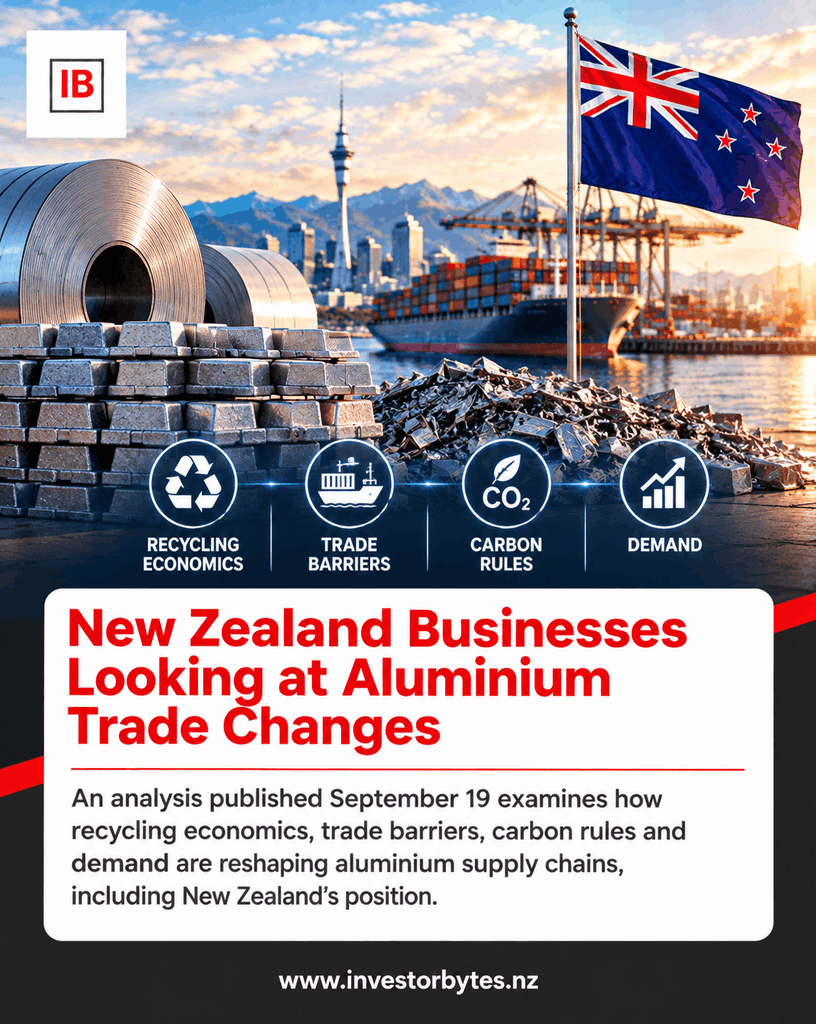
New Zealand Aluminium Trade Changes are under review as rising aluminium extrusion imports put pressure on local manufacturers and trigger a safeguard investigation.
New Zealand Aluminium Trade Changes Put Manufacturers Under Pressure
New Zealand Aluminium Trade Changes are becoming an important issue for manufacturers and businesses after a safeguard investigation was launched into certain aluminium extrusion imports.
New Zealand’s Ministry of Business, Innovation and Employment (MBIE) began a safeguard investigation on 28 May 2026 covering certain aluminium extrusions. The investigation is examining whether increased imports are causing, or threatening to cause, serious injury to domestic producers.
The development could have implications for local manufacturers, importers, construction-related businesses and companies that rely on aluminium products.
Key Takeaways
- New Zealand is investigating rising imports of certain aluminium extrusions.
- The safeguard investigation began on 28 May 2026.
- Industry representatives have reported a significant increase in imported products.
- The government has not yet made a final decision on a long-term safeguard measure.
- Australia and Singapore are excluded from the investigation because of existing free-trade arrangements.
1. Aluminium Extrusion Imports Have Increased
One of the main issues behind the investigation is the increase in imported aluminium extrusion products.
Industry representatives have reported that imports have risen substantially over the past year, creating additional competitive pressure for New Zealand manufacturers. Recent industry reporting put the increase at around 38% year-on-year.
Local producers argue that some imported products are available at prices that make it difficult for domestic manufacturers to compete.
For businesses purchasing aluminium, however, imported products can provide another source of supply and potentially lower input costs. This creates a significant trade-off for companies across the supply chain.
2. MBIE Is Investigating Possible Serious Injury
The current New Zealand Aluminium Trade Changes process is being handled through a safeguard investigation rather than an ordinary anti-dumping case.
MBIE’s investigation covers certain alloy profiles, bars and rods produced through extrusion. The ministry is examining factors including domestic production, sales, market share, profitability, productivity, employment and plant utilisation.
The purpose is to determine whether the increase in imports has caused, or threatens to cause, serious injury to New Zealand’s domestic industry.
No final conclusion about a permanent safeguard measure has been announced in the sources reviewed.
3. Local Manufacturers Want Protection
The Aluminium Extruders Association of New Zealand (ALENZ) has called for temporary protection while the wider investigation continues.
The industry has argued that rapidly increasing imports are putting pressure on local manufacturers and could affect production and skilled employment. Recent reporting said some companies had already reduced working hours and shifts.
The issue therefore extends beyond individual companies. If domestic production capacity declines, businesses could become more dependent on imported aluminium products.
At the same time, restricting imports could affect companies that depend on competitively priced aluminium for construction, manufacturing and other applications.
4. Emergency Protection Was Not Introduced
A significant recent development is that the government did not introduce the provisional emergency duty sought by the local industry.
According to recent reporting, Commerce and Consumer Affairs Minister Cameron Brewer rejected the request for provisional protection after receiving advice on the matter. The broader safeguard investigation, however, remains underway.
This means businesses are still waiting for the outcome of the main investigation.
For manufacturers, the immediate situation remains uncertain. For importers and aluminium users, the eventual decision could influence sourcing costs and supply-chain planning.
5. Trade Rules Already Exclude Some Suppliers
The investigation does not apply equally to every trading partner.
Imports from Australia and Singapore are excluded because of existing free-trade arrangements.
This is important for businesses assessing future supply options. Different trade arrangements can affect how potential safeguard measures apply to imports from different markets.
The wider New Zealand trade environment has also recently seen regulatory updates. New Customs regulations that took effect on 10 September 2026 included changes relating to the New Zealand-China and Hong Kong, China trade agreements.
What Could the Aluminium Decision Mean for Businesses?
The eventual outcome could affect several parts of the New Zealand economy.
For domestic aluminium manufacturers, trade protection could potentially reduce competitive pressure from imports. For importers and downstream businesses, however, any restrictions could change sourcing costs or supplier options.
Construction and manufacturing companies may also need to monitor the situation because aluminium extrusions are used across a range of applications.
Businesses should therefore distinguish between the current investigation and any future policy decision. The investigation itself does not automatically mean that a permanent tariff or safeguard measure will be introduced.
Impact on New Zealand Trade and Manufacturing
The debate highlights a broader issue in New Zealand’s trade policy: balancing access to competitively priced imports with maintaining domestic manufacturing capability.
The New Zealand Treasury has also noted that export-oriented businesses have continued to benefit from favourable international demand and pricing for products including aluminium.
This makes developments in the aluminium market relevant not only to manufacturers but also to New Zealand’s wider trade position.
The final outcome of the safeguard investigation will be important for businesses deciding whether to expand domestic production, continue importing or diversify their suppliers.
Final Takeaway
New Zealand Aluminium Trade Changes are being closely watched as MBIE investigates increased imports of certain aluminium extrusions. The immediate request for provisional protection was rejected, but the wider safeguard investigation continues.
For investors and businesses, the key factors to monitor are import volumes, domestic production, potential trade measures, aluminium costs and the final MBIE findings.
External Links
New Zealand Treasury – Business Engagements and Aluminium Trade