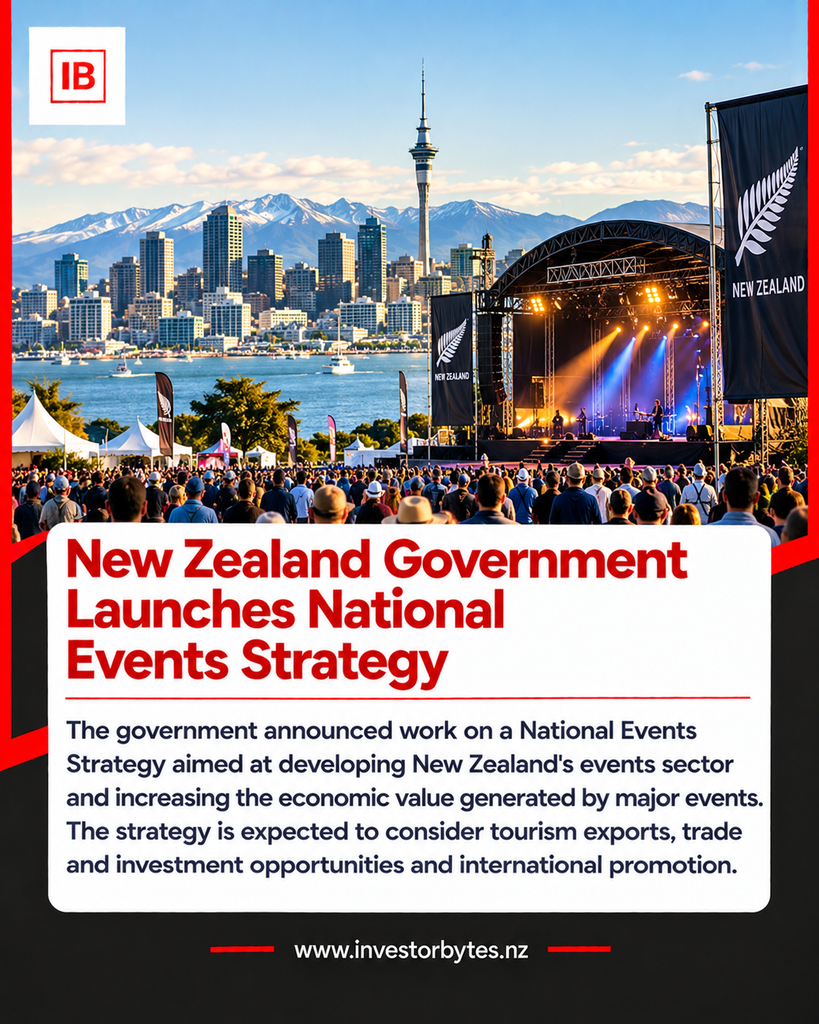
The New Zealand National Events Strategy aims to strengthen the events sector, improve coordination and increase economic value from major events.
New Zealand National Events Strategy: 5 Economic Impacts
The New Zealand National Events Strategy is being developed by the Government to help the country gain greater economic value from events and strengthen the national events sector. The initiative follows an independent review that examined how New Zealand plans, invests in and delivers events.
Events can contribute to several parts of the economy, including tourism, hospitality, transport, retail, accommodation and international promotion. Major events can also create opportunities for regional businesses and help attract visitors who spend money across local economies.
Why New Zealand Is Developing an Events Strategy
The Government announced the New Zealand National Events Strategy on 22 September 2026.
According to MBIE, the strategy will establish a longer-term direction for the events sector and encourage greater collaboration between central government, local government and industry participants.
The move follows an independent review conducted by MartinJenkins. The review examined the wider events ecosystem, including major and mega events, regional events, community events and business events.
This broader approach recognises that events can generate economic activity in different ways and across different parts of the country.
Tourism and Visitor Spending
One important economic channel is tourism.
International visitors attending major events can spend money on hotels, restaurants, transportation, entertainment and retail. Domestic visitors can also contribute to regional economic activity.
New Zealand already has a Major Events and Tourism package designed to support international visitor numbers and economic activity. MBIE says approximately NZ$70 million has been allocated across several initiatives, including an Events Attraction Package, Events Boost Fund, Regional Tourism Boost and infrastructure upgrades.
The National Events Strategy could provide a longer-term framework around these activities.
Regional Economic Opportunities
Events can also have an important regional dimension.
Large events are not limited to Auckland or Wellington. Sports competitions, cultural festivals, concerts and business events can be held in different regions and generate local spending.
For smaller businesses, increased visitor numbers can create additional demand for accommodation, food services, transportation and other services.
A coordinated national strategy could therefore help local authorities and industry participants plan events more effectively.
Trade and International Promotion
The New Zealand National Events Strategy also has potential relevance to international trade.
Major international events can bring overseas businesses, visitors, investors and media organisations to New Zealand. This can create opportunities to showcase New Zealand companies, products and destinations.
International events can also contribute to New Zealand’s reputation as a tourism and business destination.
The Government’s current strategy work is expected to consider how the events sector can operate more effectively and how information sharing and planning can be improved.
Infrastructure and Business Investment
Events also require infrastructure.
Venues, transportation systems, accommodation and digital infrastructure can all benefit from investment connected to major events.
Better planning may help local and central authorities identify infrastructure requirements earlier and coordinate investments.
For businesses, improved certainty around major events could also make it easier to plan staffing, inventory, marketing and investment.
What It Means for the Economy
The New Zealand National Events Strategy is still at the development stage, so its final economic impact will depend on the policies and implementation that follow.
For investors and businesses, the development is relevant because tourism, hospitality, transport, entertainment and regional services can all be affected by changes in visitor activity.
The strategy also demonstrates the Government’s broader focus on using tourism and events as tools for economic activity.