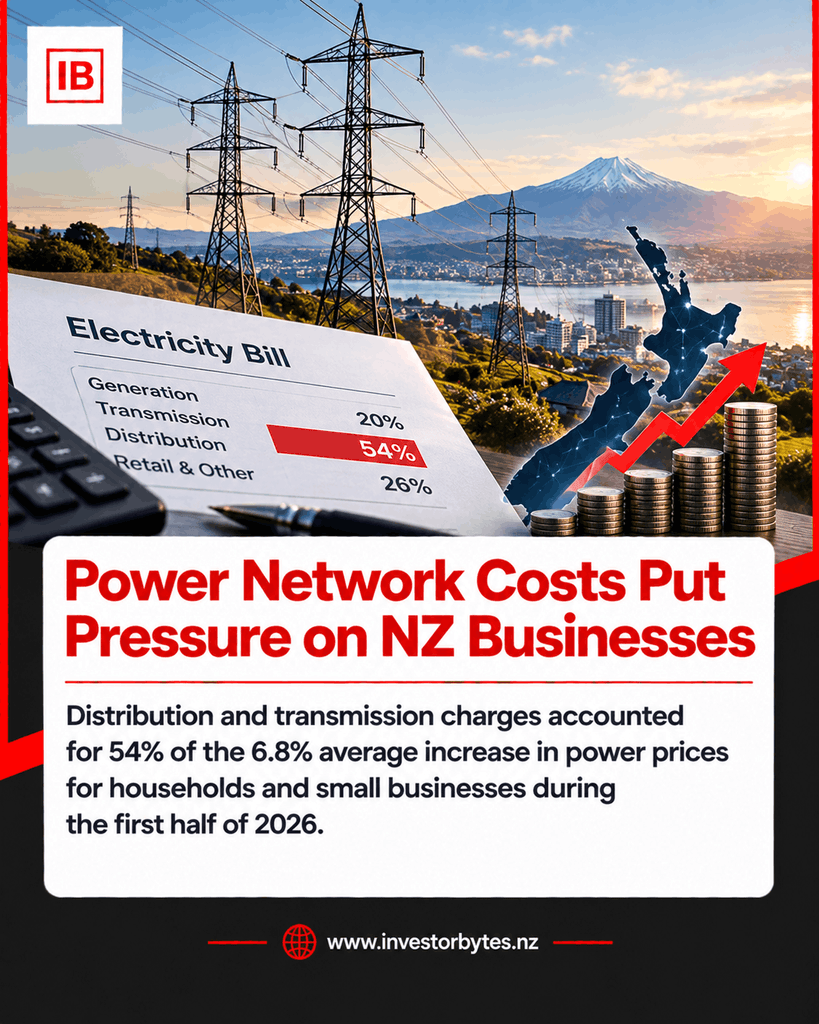
NZ power network costs were a major driver of the 6.8% average increase in electricity prices for households and small businesses in early 2026.
NZ Power Network Costs Put Pressure on Businesses
NZ Power Network Costs have become an important issue for households and small businesses after electricity prices increased by an average of 6.8% during the first half of 2026. Electricity Authority data shows that higher lines charges accounted for 54% of the increase.
The figures highlight the growing importance of transmission and distribution infrastructure in New Zealand’s electricity market. For businesses, higher electricity costs can affect operating expenses, production costs and household purchasing power.
What Are NZ Power Network Costs?
NZ Power Network Costs include charges associated with the transmission and distribution infrastructure required to deliver electricity to consumers.
Transmission networks move electricity across the country, while distribution networks deliver electricity through local networks to homes and businesses.
These infrastructure costs are reflected in electricity bills. According to the Electricity Authority, higher lines charges were the biggest reported driver of the increase in power prices during the first half of 2026.
6.8% Increase in Power Prices
Electricity Authority data showed that average power prices increased by 6.8% across households and small businesses during the first half of 2026. This followed an 8.0% increase in 2025.
Not every customer experienced the same increase. The Electricity Authority reported that around 22% of households and 34% of small businesses experienced no change between November 2025 and June 2026.
For customers whose prices changed, household bills increased by an average of 8.7%, while small business bills rose by 7.2%.
Why NZ Power Network Costs Matter
The increase in NZ Power Network Costs matters because electricity is an important input for almost every part of the economy.
Manufacturers use electricity for production, retailers require power for stores and technology systems, while offices depend on electricity for heating, cooling and digital infrastructure.
Higher electricity expenses can therefore affect business operating costs. Some businesses may absorb the additional expense, while others may adjust prices, investment plans or energy consumption.
Infrastructure Investment
A major factor behind NZ Power Network Costs is the cost of maintaining and expanding electricity infrastructure.
New Zealand’s electricity system needs investment to support reliability, population growth, electrification and changing patterns of electricity demand.
Transmission lines, substations and distribution infrastructure require ongoing maintenance and capital expenditure. These costs can eventually influence the charges paid by electricity consumers.
Impact on Small Businesses
Small businesses can be particularly sensitive to NZ Power Network Costs because electricity can represent a meaningful portion of operating expenses.
A restaurant, retail store, workshop or small manufacturing operation may have limited ability to absorb sustained increases in energy costs.
Businesses may therefore look at energy efficiency, demand management and alternative energy solutions to control expenses.
What It Means for Investors
For investors, NZ Power Network Costs highlight the importance of the electricity infrastructure sector.
Electricity networks require significant long-term investment, while growing electricity demand could increase the need for additional infrastructure.
At the same time, regulation and pricing structures remain important factors for companies involved in transmission and distribution.
Conclusion
NZ Power Network Costs are becoming an increasingly important economic issue as electricity demand and infrastructure requirements evolve.
The 6.8% average increase in power prices during the first half of 2026 shows how network charges can influence household and business electricity bills.
For businesses, investors and policymakers, NZ Power Network Costs will remain an important area to monitor as New Zealand continues investing in its electricity system.
follow www.investorbytes.nz for more updates.
External resource: New Zealand Electricity Authority – Power Price Data