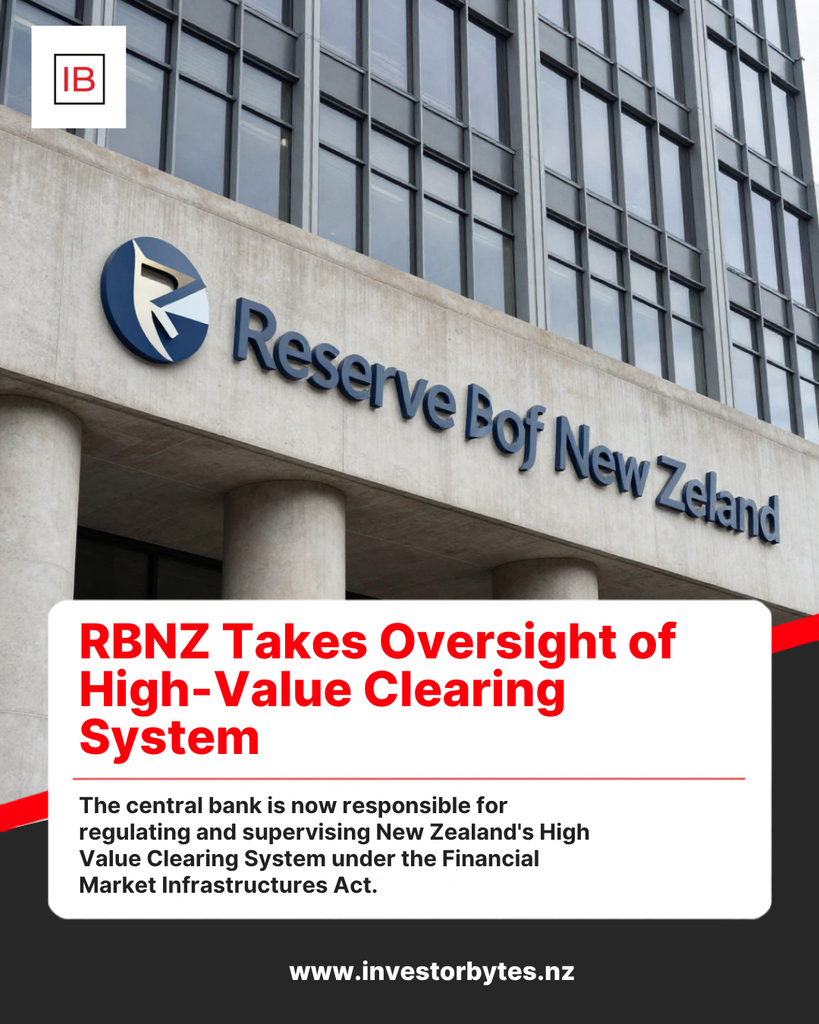
RBNZ High Value Clearing System oversight has begun under the Financial Market Infrastructures Act, strengthening supervision of major payments in New Zealand.
RBNZ High Value Clearing System Oversight Begins Under FMI Act
The RBNZ High Value Clearing System oversight framework has taken effect, bringing New Zealand’s High Value Clearing System (HVCS) under regulation and supervision by the Reserve Bank of New Zealand (RBNZ).
The development follows a designation of the HVCS under the Financial Market Infrastructures Act 2021, giving the central bank formal supervisory responsibilities over one of New Zealand’s key payment systems. The RBNZ announced the development on 15 September 2026.
The HVCS is operated by Payments NZ and facilitates the clearing of high-value payments between participating financial institutions. It is particularly important for transactions that require timely and reliable settlement, including large commercial payments and house settlements.
What Is the High Value Clearing System?
The RBNZ High Value Clearing System is a payment system that provides rules and arrangements for customer-to-customer real-time payments and high-value payments between participating financial institutions.
The system is connected with the Reserve Bank’s Exchange Settlement Account System (ESAS), where settlement takes place. This means the HVCS plays a role in the broader infrastructure that allows financial institutions to transfer funds and settle payment obligations.
The RBNZ’s earlier consultation described HVCS as a critical part of New Zealand’s payments infrastructure because it handles large payments that cannot easily be reversed or substituted through another system.
This includes transactions associated with property settlements and other high-value financial activity.
Why RBNZ Is Taking Oversight
The move to formally supervise HVCS follows an extended regulatory process.
The RBNZ first proposed recommending designation of the system under the Financial Market Infrastructures Act. The Bank consulted market participants and stakeholders before making its recommendation to the Minister of Finance. The consultation process included submissions on the proposed rules and compliance costs.
The RBNZ said designation would allow it to regulate and supervise the HVCS and require the system to comply with the FMI Act and relevant FMI Standards.
The objective is not simply to oversee individual transactions. Financial market infrastructure regulation is designed to help ensure critical systems operate safely and efficiently and that disruptions do not create unnecessary risks for the wider financial system.
The RBNZ explains that financial market infrastructures help keep financial markets operating smoothly and support financial stability.
More Than NZ$420 Billion in Monthly Clearing
The scale of the HVCS helps explain why it has attracted greater regulatory attention.
During its consultation process, the RBNZ said more than NZ$420 billion of transactions were cleared through HVCS each month, an amount greater than New Zealand’s monthly GDP. The Bank described the system as difficult to substitute and said disruption could have consequences for the financial system.
Earlier RBNZ analysis also found that HVCS cleared an average interchange value equivalent to more than New Zealand’s GDP each month in 2024. The system’s total transaction value was substantially higher when including transactions occurring between customers of the same institution.
These figures demonstrate that HVCS is not a small back-office payment arrangement. It is part of the infrastructure supporting substantial financial flows across New Zealand.
What Changes Under the New Framework?
Under the new RBNZ High Value Clearing System oversight arrangement, the system operator and its rules fall within the regulatory framework established by the Financial Market Infrastructures Act.
The RBNZ can now supervise the HVCS against applicable requirements and standards. Designation also provides stronger legal protections for the system’s rules.
The regulatory framework covers areas relevant to the safe operation of financial market infrastructure, including governance, access arrangements, operational resilience and crisis management.
The RBNZ previously said that formal designation would give it the ability to examine areas such as governance, access and crisis management more closely.
For financial institutions participating in the system, the change therefore provides a more formal regulatory framework around a payment infrastructure they already rely on.
Importance for New Zealand Financial Stability
Payment systems are a fundamental part of a modern financial system. Banks and other financial institutions depend on reliable infrastructure to transfer money, settle obligations and complete transactions.
The RBNZ states that disruption to financial market infrastructures can affect financial markets, businesses and individuals. This is why designated FMIs are subject to regulatory oversight and requirements designed to promote resilience.
The RBNZ High Value Clearing System designation therefore fits into a broader programme of financial-market infrastructure oversight.
The RBNZ already supervises other designated financial market infrastructures, including systems involved in securities settlement and payments. Its register of designated FMIs now lists HVCS as a designated system operated by Payments NZ.
What It Means for Banks and Financial Markets
For banks and other HVCS participants, the regulatory change could increase the importance of compliance with system rules and regulatory standards.
The designation also gives the RBNZ greater visibility over potential operational and financial risks within the system.
For businesses and consumers, the change is less likely to be visible in everyday transactions. However, the underlying infrastructure is important because large payments must be cleared and settled reliably even when financial markets are experiencing stress.
A resilient payment system can help reduce the possibility that operational problems at one part of the financial system spread more widely.
The RBNZ’s broader financial-market infrastructure framework focuses on sound and efficient operation, reducing the potential damage caused by failures or financial-system distress, and supporting confident and transparent financial markets.
Broader Payments Infrastructure Developments
The RBNZ High Value Clearing System development comes as the central bank continues examining New Zealand’s wider payments infrastructure.
In August 2026, the RBNZ published work examining issues facing the country’s retail payments system. The Bank noted that existing infrastructure is operationally reliable but identified areas where New Zealand’s payments system could be modernised.
The central bank has also been working on financial-market infrastructure oversight alongside other regulatory responsibilities.
The HVCS designation is therefore part of a broader effort to strengthen the regulatory framework around systems that are important to New Zealand’s financial markets.
What Investors Should Watch
For investors and financial-market participants, the key issue is the resilience and reliability of New Zealand’s payments infrastructure.
The designation of HVCS does not itself represent a change to the Reserve Bank’s Official Cash Rate or monetary-policy settings. Instead, it concerns the regulatory and supervisory framework surrounding a critical payment system.
Market participants can nevertheless monitor future RBNZ publications for developments involving HVCS rules, operational resilience, financial-market infrastructure standards and broader payments-system reforms.
The RBNZ’s register of designated financial market infrastructures will also provide a reference point as the Bank continues expanding its oversight of systemically important financial infrastructure.
External Authoritative Sources
RBNZ — HVCS Regulation Consultation Announcement
RBNZ — Register of Designated Financial Market Infrastructures