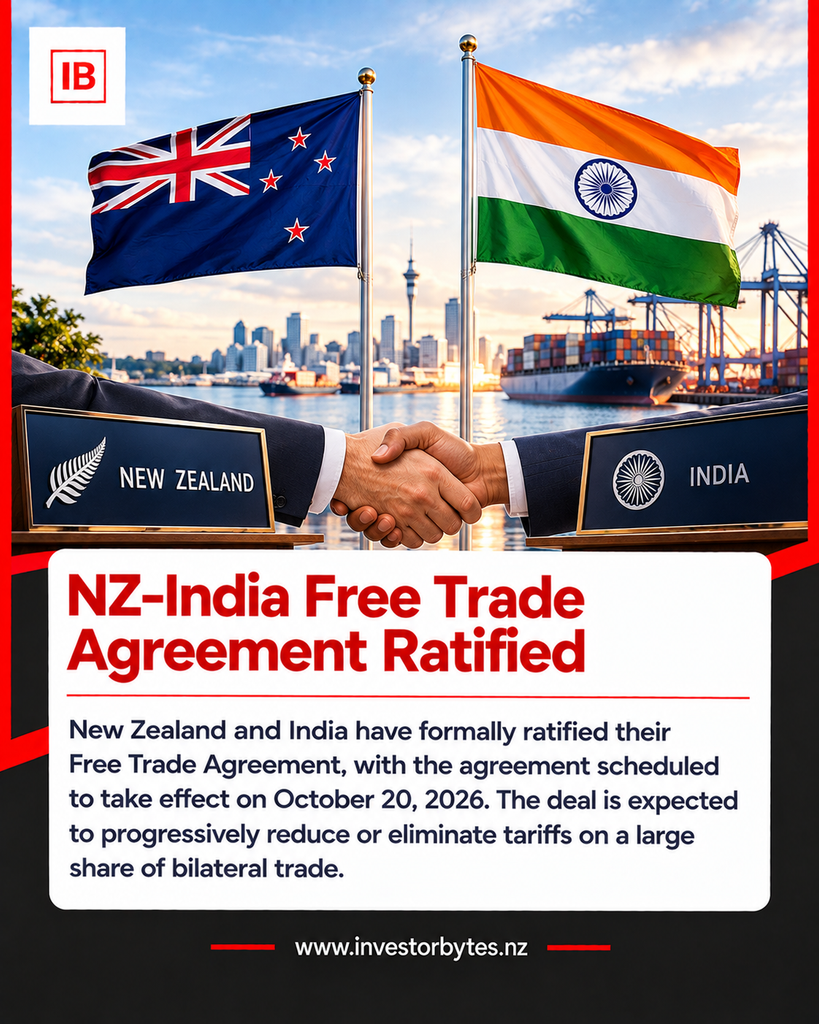
The NZ-India Free Trade Agreement has been ratified and is scheduled to enter into force on October 20, 2026, opening new trade opportunities.
NZ-India Free Trade Agreement: 5 Key Trade Changes
The NZ-India Free Trade Agreement has been formally ratified by New Zealand and India, clearing the way for the agreement to enter into force on 20 October 2026. The agreement is designed to progressively reduce or eliminate tariffs and create new opportunities for bilateral trade and investment.
The development is important for New Zealand exporters because India is one of the world’s major economies and a significant long-term market opportunity.
What the NZ-India Free Trade Agreement Means
The NZ-India Free Trade Agreement establishes a framework for improving market access between the two countries.
New Zealand’s Ministry of Foreign Affairs and Trade says total two-way trade between New Zealand and India is approximately NZ$3.95 billion annually. New Zealand’s exports to India were NZ$2.03 billion in the year ended December 2025.
The agreement is intended to reduce barriers and create a more predictable environment for businesses.
Entry Into Force
The agreement is scheduled to take effect on 20 October 2026.
Ratification is an important step because it completes the domestic approval process required for the agreement to become operational.
Once the agreement enters into force, businesses will be able to begin using the negotiated market-access arrangements according to the agreement’s schedules and rules.
Opportunities for New Zealand Exporters
New Zealand companies in agriculture, food, manufacturing and other export industries could potentially benefit from improved access to the Indian market.
India’s large population and expanding economy create opportunities for exporters looking to diversify their customer base.
Market diversification can be important because exporters can reduce their reliance on a small number of markets.
The NZ-India Free Trade Agreement therefore has relevance for companies considering long-term expansion into India.
Investment and Business Connections
Trade agreements are not limited to tariffs.
They can also support broader economic relationships between countries by improving certainty and encouraging businesses to explore new commercial relationships.
MFAT describes India as a strategic priority for New Zealand because of its economic scale, global influence and regional importance. The ministry says deeper trade and investment links could help diversify New Zealand’s export markets and support growth.
Māori Business Opportunities
The agreement also includes consideration of Māori economic interests.
MFAT states that the agreement will increase opportunities and reduce barriers for Māori businesses.
This is relevant because Māori businesses participate across agriculture, food production, tourism, services and other industries.
Improved access to international markets can create opportunities for businesses that are prepared to develop products and relationships suited to Indian consumers.
What Businesses Should Watch
The NZ-India Free Trade Agreement does not mean every product will immediately receive identical treatment.
Businesses need to examine the agreement’s tariff schedules, rules of origin and product-specific requirements.
Exporters should also consider logistics, regulatory requirements, consumer preferences and currency risks.
India is a large and diverse market, so market access is only one part of building successful commercial relationships.
Outlook for NZ-India Trade
The agreement marks a new stage in the economic relationship between New Zealand and India.
For exporters, investors and businesses, the October 20 entry-into-force date will be an important milestone.
The longer-term impact will depend on how businesses use the new market-access opportunities and how bilateral trade develops after implementation.
Source: New Zealand Ministry of Foreign Affairs and Trade – NZ-India FTA